
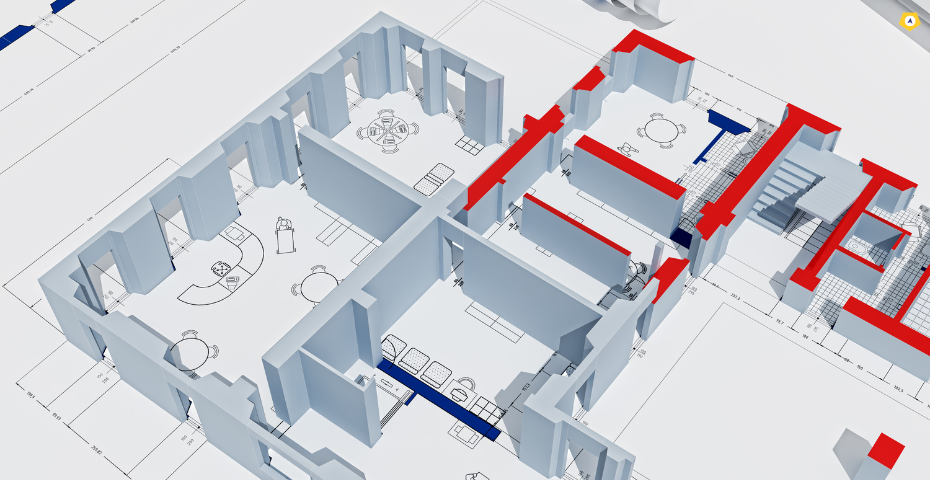
AEC BIM Modelling
Step into the future of the construction industry with complete AEC BIM Modelling mastery. Learn how Building Information Modelling transforms drawings into intelligent 3D models that improve accuracy, coordination, and communication across every stage of a project. You’ll understand how BIM helps architects, engineers, and consultants work together seamlessly on a single, cloud-based digital environment.
Through hands-on training, you’ll explore how BIM enhances design quality, eliminates clashes, improves material estimation, speeds decision-making, and reduces costly site revisions. Whether it’s architecture, structure, or MEP services, you’ll learn how data-rich models drive smarter, faster, and more coordinated project delivery—exactly how modern consultancy firms operate today.
3D Model Creation & Visualization
Build accurate and intelligent 3D BIM models that help teams visualize spaces, services, and structural elements long before construction begins.
Clash Detection & Coordination
Identify design conflicts between architectural, structural, and MEP systems early, and learn how BIM tools solve these issues before they reach the site.
Quantity Take-offs & BOQs
Generate automatic quantities, material schedules, and BOQs—improving accuracy and saving days of manual estimation work.
Design Collaboration & Documentation
Coordinate multiple disciplines within a common BIM environment, ensuring smooth communication and consistent documentation across teams.
BIM Standards & LOD Management
Learn about global BIM standards, Levels of Detail (LOD), naming conventions, templates, and modelling protocols used in professional consultancy and construction setups.
Project Lifecycle Integration
Understand how BIM supports every stage—concept design, development, construction, handover, and facility management—creating long-term value for all stakeholders.
🏛 Architectural BIM Modelling
Architectural BIM Modelling helps you develop intelligent 3D building layouts with accurate walls, floors, windows, doors, finishes, and interior details. You’ll learn how architects use BIM to visualize spaces, plan layouts, check sunlight, analyse area statements, and coordinate seamlessly with structural and MEP teams. This ensures early-stage accuracy and reduces costly design revisions later.
🏗 Structural BIM Modelling
Structural BIM Modelling trains you to create precise models of beams, columns, slabs, foundations, reinforcements, and steel elements. You’ll understand how structural engineers use BIM to analyse load paths, detect interferences, and prepare detailed construction-ready drawings. This results in stronger coordination, higher accuracy, and safer structures with optimized material usage.
🔧 MEP BIM Modelling
MEP BIM Modelling helps you design and coordinate HVAC ducts, electrical conduits, plumbing pipes, fire-fighting lines, and ELV systems within a clash-free environment. You’ll learn how consultants create intelligent service models that follow technical standards, ensure maintainability, and remain fully aligned with architectural and structural plans. This leads to smoother execution and better-performing buildings.
✅ LOD 200 — Approximate & Conceptual Modelling
LOD 200 represents a generalized, early-stage model where elements are shown with approximate size, shape, location, and orientation.
Used during concept design and schematic planning
Helps teams understand space planning, early coordination, and initial design intent
Suitable for basic quantity take-offs and preliminary decision-making
At this stage, the model is not detailed but provides a reliable visual framework for all disciplines to begin coordination.
✅ LOD 300 — Detailed & Accurate Design Modeling
LOD 300 delivers a more accurate and dimensionally correct model, suitable for producing detailed design drawings.
Elements have actual dimensions, locations, and orientations
Coordinated layouts across architectural, structural, and MEP services
Used for tender drawings, consultant approvals, and detailed BOQs
At this level, the model becomes a trustworthy source for construction documentation and inter-disciplinary coordination.
✅ LOD 350 — Advanced Coordination Modeling
LOD 350 adds the level of detail required for real-world installation and system connections.
Shows supports, clearances, interfaces, and connection points
Used for on-site coordination with contractors
Detects clashes between services, walls, beams, ceilings, and equipment
This level ensures that every component fits correctly, avoiding costly rework during installation.
✅ LOD 400 — Fabrication & Construction-Ready Modelling
LOD 400 represents fabrication-level detail, making it suitable for manufacturing, prefabrication, and installation.
Elements modeled exactly as they will be built
Includes fabrication data, spooling, hanger details, pipe fittings, and duct accessories
Used by contractors, fabricators, and site teams during execution
At this stage, the model is so precise that teams can directly manufacture components from it, ensuring high accuracy and zero guesswork on site.
LOD 100–500 Comparison Table
| LOD Level | Name / Stage | Description | Detail Level | Use Cases |
|---|---|---|---|---|
| LOD 100 | Conceptual | Elements are represented symbolically with approximate size, shape, and location. | Very Low | Concept design, massing studies, early feasibility checks. |
| LOD 200 | Schematic | Elements have approximate dimensions, placement, and generic system representation. | Low–Medium | Schematic design, initial coordination, early quantities. |
| LOD 300 | Detailed Design | Elements modeled with accurate size, shape, location, and orientation. | Medium–High | Detailed drawings, tender sets, precise BOQs, consultant approvals. |
| LOD 350 | Advanced Coordination | Includes interfaces, connections, supports, clearances, and more realistic detailing. | High | Clash detection, site coordination, installation planning. |
| LOD 400 | Fabrication | Modeled with fabrication-level detail including fittings, hangers, and spooling info. | Very High | Manufacturing, prefabrication, contractor execution. |
| LOD 500 | As-Built | Final model representing exactly what has been installed on-site. | Highest | Facility management, maintenance, lifecycle documentation. |
Our Details
- Swaraj Capital, Moshi, Pune 412105
- +91-91527-15920
- info@neoinfinit.info
- Legal Name: NEOINFINIT
Userful Link
Services
Subscribe Newsletter
Subscribe to our newsletter for discounts, specials, and more! We value your privacy.
Designed & Developed by NEOINFINIT SOFTECH. © Copyright 2025.